

Description
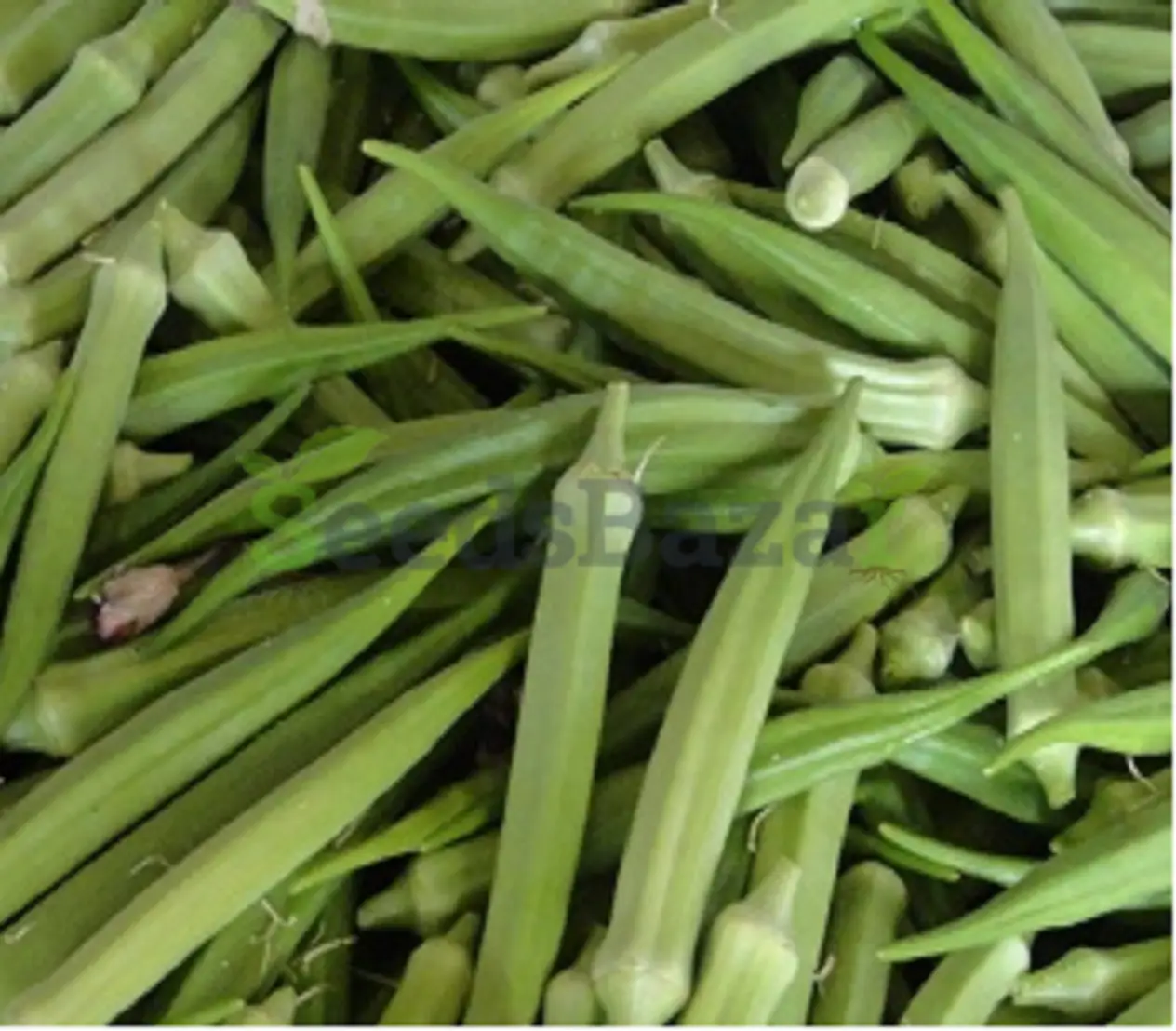
Okra (Lady’s Finger / Bhindi)
Discover how easy it is to grow bhindi at home for a fresh, organic harvest! First and foremost, okra is highly nutritious, low in calories, and actively helps protect your body from illness.
In addition, incorporating homegrown, chemical-free okra into your regular diet offers excellent health wellness benefits:
- Lowers blood sugar: Specifically, it contains insulin-like properties that help manage diabetes naturally.
- Improves digestion: Because it is rich in dietary fiber, it effectively prevents constipation and heals the gut lining.
- Lowers bad cholesterol: Consequently, the soluble fiber helps bind cholesterol during digestion to promote heart health.
- Boosts immunity: Furthermore, it is packed with Vitamin C and powerful antioxidants to help your body fight infections.
This kitchen garden variety produces medium-short pods with a thick pulp. Therefore, it is an incredibly hardy, sun-loving plant that is easy to cultivate directly from seed. As a result, it is perfect for beginner plant lovers.
🌱 Sowing & Germination Guide
Follow these simple, time-tested steps to successfully grow bhindi at home from seeds:
- Pre-treatment: First, soak your seeds in a bowl of lukewarm water for 2 to 3 hours before planting. Consequently, this will soften the hard outer seed coat.
- Sowing method: Next, plant the seeds directly into their final pot or garden spot.
- No transplanting required: Note that okra roots are highly sensitive. For this reason, you do not need to raise separate seedlings first.
- Seed covering: Subsequently, press seeds about 0.5 inches deep into the soil and cover them lightly with a layer of fine cocopeat.
- Sprouting trick: Finally, cover the pot with a damp jute bag or dry grass to trap ambient heat. In doing so, you will significantly speed up the sprouting process.
☀️ Sun, Water & Climate Requirements
- Sunlight: Crucially, okra requires 6 to 8 hours of full, direct sunlight daily. In contrast, it cannot tolerate shady or dark areas.
- Temperature: Moreover, it grows best in warm weather between 20°C and 35°C. Accordingly, this makes it an ideal crop for Indian summers and monsoons.
- Watering: Meanwhile, keep the soil constantly moist but never soggy or waterlogged. However, avoid letting the soil dry out completely between watering sessions.
✂️ Harvesting Tips for More Yield
- Frequent picking: Above all, cut the okra pods regularly using garden shears once they reach 3–4 inches long. Indeed, regular harvesting encourages the plant to continuously grow even more fruit throughout the season.
❓ FAQ: How to Grow Bhindi at Home Successfully
What size pot is best for growing okra?
To successfully grow bhindi at home, you must use a container or grow bag that is at least 12 inches deep and 12 inches wide for a single plant. This is because okra develops a deep taproot system that needs ample room to expand. Otherwise, the plant’s growth will be severely stunted.
To successfully grow bhindi at home, you must use a container or grow bag that is at least 12 inches deep and 12 inches wide for a single plant. This is because okra develops a deep taproot system that needs ample room to expand. Otherwise, the plant’s growth will be severely stunted.
Why are my okra flowers falling off without producing fruit?
Generally, flower drop happens due to extreme temperature fluctuations, poor pollination, or inconsistent watering. To avoid this, ensure your plant gets full sun and regular moisture to retain its blossoms.
Generally, flower drop happens due to extreme temperature fluctuations, poor pollination, or inconsistent watering. To avoid this, ensure your plant gets full sun and regular moisture to retain its blossoms.
What is the best soil mix for okra seeds?
For best results, use all the seeds within 2 weeks of delivery. Additionally, for growing healthy seedlings, use a fine potting mixture of soil/sand, Coco-peat, and organic compost mixed in a balanced 1:3:1 ratio. Afterwards, you can check out our step-by-step guide on how to sow seeds.
For best results, use all the seeds within 2 weeks of delivery. Additionally, for growing healthy seedlings, use a fine potting mixture of soil/sand, Coco-peat, and organic compost mixed in a balanced 1:3:1 ratio. Afterwards, you can check out our step-by-step guide on how to sow seeds.
🩺 Disclaimer
Please note that the nutrient information provided on our website is for educational purposes only and is not medical advice. Therefore, you should consult a healthcare professional before changing your diet.



Reviews
There are no reviews yet.